It started on the farm.
I didn't start with a roaster. I started with soil. My first work in coffee was managing a biodynamic farm — learning how shade, compost, altitude and timing decide what ends up in a cup long before anyone switches on a machine. That year taught me something most people in this industry skip: coffee is agriculture first.
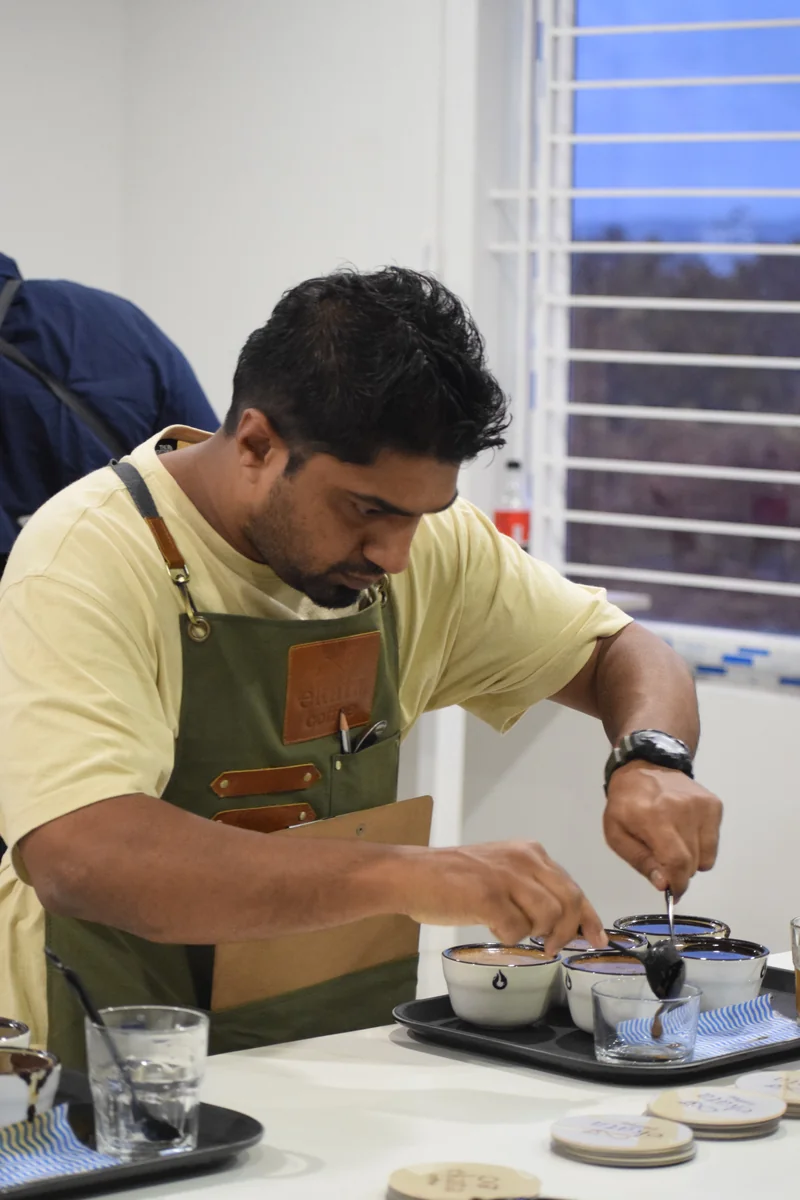
From the farm I moved into post-harvest processing and green grading, evaluating quality at origin — sorting, screening, moisture, defects. Then sample roasting and cupping, running quality control on export-ready lots. Every coffee I've bought since, I've bought with those years behind me.
Then the roastery.
I worked through the full production cycle at two specialty roasteries — charge to drop, batch after batch, until profiling stopped being theory. Behind the bar I set up barista stations, calibrated espresso machines, dialled in and engineered menus. I trained as a manual brewing barista because I wanted to understand the last step as well as the first.
Then I started teaching it. Pop-ups, workshops, training sessions — for baristas, for café owners, for people who just wanted their home brew to stop tasting bitter.